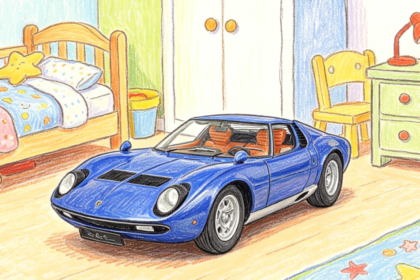

When Lamborghini unveiled the Miura at the 1966 Geneva Motor Show, it did more than introduce a new sports car—it invented the modern supercar segment, redefining what a high-performance road vehicle could be. More than six decades later, the Miura remains an icon of automotive audacity, and its audience is as distinctive as the car itself: a select group of passionate collectors, vintage car enthusiasts, and connoisseurs who value legacy, innovation, and uncompromising character over modern convenience. Unlike contemporary supercars that cater to a broader range of buyers, the Miura speaks to those who crave a connection to automotive history, those who understand its role as the first production road car with a rear mid-engine, rear-wheel-drive layout—a design that would become the standard for performance vehicles worldwide.
The core audience of the Miura consists of two primary groups: seasoned collectors and nostalgic enthusiasts. For collectors, the Miura is a prized investment, a piece of automotive heritage whose value has soared over the years—especially the rare SV version, with only 150 units produced, making it one of the most coveted classic supercars on the market. These buyers are often affluent, with a deep knowledge of automotive history, and they prioritize authenticity and originality; many go to great lengths to restore and preserve their Miuras to their original factory specifications. They are not just buying a car, but a piece of Lamborghini’s DNA—a symbol of the brand’s courage to break with tradition, even against the wishes of founder Ferruccio Lamborghini, who initially preferred sedate grand touring cars over race-derived machines. The second group is nostalgic enthusiasts, often younger car lovers who admire the Miura’s timeless design and revolutionary spirit. They may not own an original Miura, but they are obsessed with its legacy, attending classic car shows, collecting memorabilia, and dreaming of one day owning a piece of this automotive legend.
Driving the Lamborghini Miura is an experience unlike any modern supercar—raw, physical, and deeply immersive, a throwback to an era when driving was a deliberate, engaging act. The first thing that strikes any driver is the car’s compact, low-slung stance; at just 1,055 mm tall, it hugs the road, creating an immediate sense of connection to the tarmac beneath you. The transverse mid-mounted 3.9-liter V12 engine, positioned just behind the cockpit, unleashes a thunderous roar that echoes directly into the cabin, a sound that has become synonymous with automotive passion. In its final SV iteration, the engine produces up to 385 cv, propelling the Miura to a top speed of 290 km/h—making it the fastest production car in the world at the time of its launch. The acceleration is visceral, with a linear surge of power that builds steadily as the rev counter climbs, reminding the driver that this is a car built for pure exhilaration.
The driving experience is unapologetically old-school. The 5-speed manual transmission features a gated shifter that requires deliberate, precise inputs, and the floor-hinged pedals demand a firm foot, creating a physical connection between driver and machine that modern automatic transmissions cannot replicate. The steering is relatively low-geared, requiring more effort than contemporary supercars, but it offers exceptional feedback, allowing the driver to feel every nuance of the road. While the Miura is known for a slight front-end lift at high speeds—exacerbated when the fuel tank is empty—and a tendency toward understeer if pushed to its limits, few owners drive it hard enough for this to be a concern these days. At a more measured pace, the Miura shines: the V12’s low-rev tractability makes it surprisingly manageable in urban settings, while its predictable handling and strong brakes inspire confidence on winding roads. Driving a Miura is not about comfort or convenience; it is about experiencing automotive history firsthand, feeling the same thrill that captivated audiences at the 1966 Geneva Motor Show.
For its audience, the Miura is more than a car—it is a statement of taste and a celebration of automotive innovation. It appeals to those who value character over perfection, who embrace the car’s quirks as part of its charm. In a world of increasingly sanitized, tech-heavy supercars, the Miura remains a refreshing reminder of what driving should be: raw, passionate, and uncompromising. It is a car for those who do not just want to drive, but to connect with a legacy that changed the course of automotive history forever.