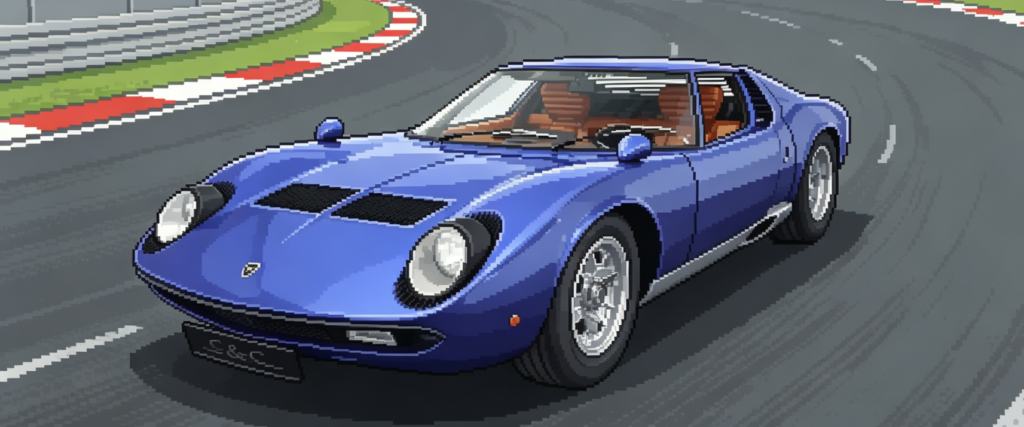

When Lamborghini unveiled the Miura at the 1966 Geneva Motor Show, it didn’t just launch a new car—it invented the modern supercar. With its revolutionary mid-engine layout, striking Bertone design, and thunderous V12 heart, the Miura redefined what a road car could be, and its audience has always been as extraordinary as the vehicle itself. This is not a car for the faint of heart or those seeking practicality; it is reserved for passionate enthusiasts, collectors, and connoisseurs who crave automotive history, uncompromised emotion, and the raw thrill of a machine that prioritizes feel over convenience.
The core audience of the Lamborghini Miura is a mix of vintage car collectors, automotive historians, and purists who value authenticity above all else. Many are drawn to its status as the “first supercar,” a title that cements its place in automotive lore. These individuals are not just buying a car—they are investing in a piece of history, one that represents a pivotal moment when Lamborghini dared to challenge the status quo. They appreciate the Miura’s handcrafted nature, its lack of modern driver aids, and the way it connects the driver to the road in a way that few modern cars can. For them, the Miura is more than a mode of transportation; it is a work of art, a symbol of courage and innovation that defies the passage of time. Additionally, the Miura appeals to wealthy enthusiasts who seek exclusivity—with only 764 units produced between 1966 and 1973, owning one is a mark of distinction, a way to stand out from those who opt for more contemporary supercars.
The driving experience of the Lamborghini Miura is an exercise in raw, unfiltered passion—one that demands skill, focus, and a deep respect for the machine. At its heart lies a 3.9-liter V12 engine, mounted transversely in the mid-rear, a revolutionary layout at the time that delivered unmatched weight distribution and handling precision. In its final P400 SV iteration, this engine produced 385 horsepower, propelling the Miura to a top speed of 290 km/h (174 mph)—making it the fastest production car in the world when it was released. The acceleration is visceral: 0-100 km/h in just 6.7 seconds, with a surge of power that builds steadily as the engine screams toward its 7,850 rpm redline. The sound is unmistakable—a deep, guttural roar that echoes through the cabin, a symphony of mechanical perfection that modern hybrid supercars cannot replicate.
Driving the Miura requires engagement; there are no electronic stability controls, no automatic transmission, and no power steering to soften the experience. The manual five-speed transmission with its open shift gate demands precise, deliberate movements, and the steering is heavy at low speeds, rewarding drivers who take the time to master its nuances. On winding roads, the Miura comes alive—its rigid chassis and balanced weight distribution allow for sharp, responsive turns, with the rear end dancing slightly when pushed, a reminder that this is a car that requires the driver to be in complete control. It is not a car for casual driving; it is a car that demands attention, rewarding those who are willing to invest the time to understand its quirks and embrace its flaws. For its audience, this is exactly the appeal—the Miura is a partnership between driver and machine, a visceral experience that connects them to the roots of automotive performance.
In a world of increasingly sanitized, technology-laden supercars, the Lamborghini Miura remains a testament to the power of passion and innovation. Its audience doesn’t just want a fast car—they want a car with soul, a car that tells a story, a car that makes them feel alive. The driving experience is not about comfort or convenience; it’s about connection, about feeling every vibration, every shift, every surge of power. For those who understand and appreciate it, the Miura is more than a supercar—it’s a legend, one that continues to captivate and inspire decades after it first rolled off the production line.