
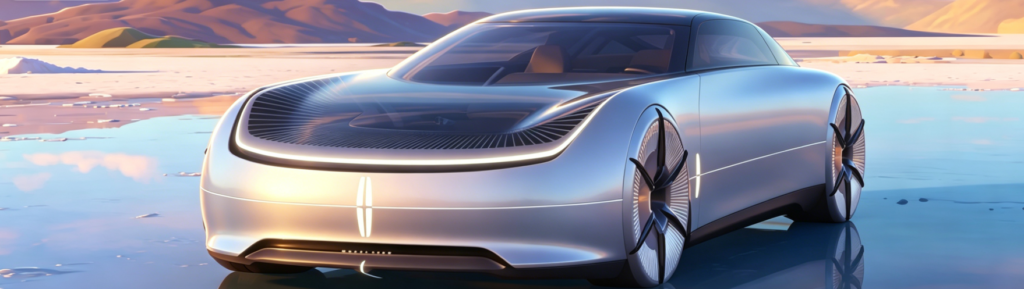
A new concept car is far more than just a stylish prototype displayed at international auto shows. It serves as a forward-looking blueprint that showcases the automotive industry’s future direction in design, intelligent technology, new energy power, travel philosophy and human-car interaction. Every year, major automobile brands release a variety of new concept cars at auto exhibitions around the world. These models abandon the traditional design limitations of mass-produced cars, break the inherent thinking of vehicle structure and functional layout, and integrate cutting-edge technologies such as new energy, artificial intelligence, autonomous driving, smart cockpit and bionic design. They are not only a preview of the design language of future mass-produced models but also an important carrier for exploring new travel modes, environmental protection concepts and intelligent life scenes.
In terms of exterior design, new concept cars completely get rid of the conventional sedan and SUV silhouette of traditional models, and mostly adopt bionic design, futuristic streamline and minimalist geometric lines. Many concept cars draw inspiration from natural creatures such as sharks, birds and marine life, combining aerodynamic principles with artistic aesthetics. The closed front face design has become the standard of most new energy concept cars, canceling the traditional fuel vehicle grille, and using smooth integrated lines to reduce wind resistance coefficient to an extreme level. The hidden door handles, seamless body curves, panoramic glass canopy and variable light and shadow body decorations make the whole vehicle full of a strong sense of technology and future. Some high-end concept cars also adopt gull-wing doors, scissor doors and sliding door designs, which not only enrich the visual layering but also bring a more ceremonial access experience. The light group design is also completely upgraded. The front and rear LED light sets support dynamic breathing light effects, custom light language and scene linkage lighting, which can interact with pedestrians, road facilities and other vehicles, realizing the visual communication between cars and the outside world.
The interior space and cockpit design of new concept cars have undergone a revolutionary change, abandoning the traditional mechanical instrument panel, physical buttons and fixed seat layout, and moving towards intelligence, modularization and living space. The inside of the car no longer simply takes driving as the core, but turns into a mobile smart living room, office space and leisure entertainment space. The full-through ultra-large curved screen, floating central control screen and transparent augmented reality HUD run through the entire cockpit, realizing full-screen interaction and scene switching. Physical buttons are completely replaced by voice control, gesture recognition, face recognition and eye-tracking interaction. Passengers can control vehicle functions, adjust entertainment equipment and set navigation routes only through simple voice commands or gesture actions. The seat layout supports electric rotation, sliding and folding deformation. When the vehicle enters the autonomous driving mode, the driver’s seat can rotate 180 degrees to face the rear seats, forming a circular leisure conversation space, which is convenient for family gatherings, business negotiations and entertainment interactions during the journey. A large area of environmentally friendly recycled leather, biodegradable materials and natural ecological fabrics are used inside the car, adhering to the green and sustainable development concept.
In terms of power and energy system, new concept cars almost fully abandon traditional internal combustion engines and adopt pure electric, hydrogen fuel cell, solar power and hybrid new energy forms. Pure electric concept cars are equipped with next-generation solid-state batteries, which have the advantages of ultra-long battery life, ultra-fast charging, small size and high safety. It only takes a few minutes to charge from 10% to 80%, and the cruising range can easily break through 1000 kilometers. Hydrogen fuel cell concept cars realize zero emission and zero pollution truly. The only emission during operation is water, which perfectly solves the problems of energy consumption and environmental pollution in traditional automobiles. Some cutting-edge concept cars are also equipped with body solar film panels, which can continuously charge the power battery when driving or parking outdoors, making up for the insufficient cruising range and realizing self-sufficient clean energy supply. At the same time, the chassis adopts an integrated skateboard platform, integrating battery, motor, suspension and steering system, which not only improves space utilization, but also lays a foundation for the deformation and reconstruction of the vehicle body.
Intelligent driving and vehicle networking technology are the core competitiveness of new concept cars. Most concept cars are equipped with L4 and even L5 full autonomous driving systems, equipped with lidar, high-definition cameras, millimeter-wave radar and all-round perception sensors, which can accurately identify road conditions, traffic signs, pedestrians and obstacles in complex road environments. The vehicle can independently complete navigation, lane changing, overtaking, parking and emergency risk avoidance without manual operation by the driver. Relying on the 5G and future 6G vehicle networking system, the concept car can realize real-time interconnection with smart roads, smart traffic lights, other vehicles and smart home devices. It can automatically plan travel routes according to traffic congestion, remotely control home electrical equipment when going out, and synchronize life and travel data seamlessly. The intelligent system also supports self-learning and continuous OTA upgrade, which can optimize driving logic, enrich entertainment functions and upgrade safety performance according to user usage habits and road environment changes.
In terms of safety and environmental protection, new concept cars have reached a new height. The body adopts lightweight carbon fiber, aluminum alloy and high-strength composite materials, which reduce the overall weight while greatly improving the structural crashworthiness. The intelligent active safety system can predict potential risks in advance and take initiative braking and evasive measures. All interior materials are environmentally friendly and tasteless, meeting global ecological standards. The power system achieves zero carbon emissions throughout the life cycle, responding to the global carbon neutrality and peak carbon dioxide emissions strategy.
To sum up, new concept cars are the crystallization of automobile design, new energy technology and intelligent travel innovation. They not only represent the highest level of current automobile research and development, but also depict the future travel scene of mankind: environmental protection, intelligence, comfort and interaction. With the gradual maturity of technology, many design concepts and intelligent configurations of concept cars will eventually be popularized and landed on mass-produced cars, leading the entire automotive industry to move towards a greener, smarter and more humanized new era.
